Lambing Season: What Really Happens at 2am
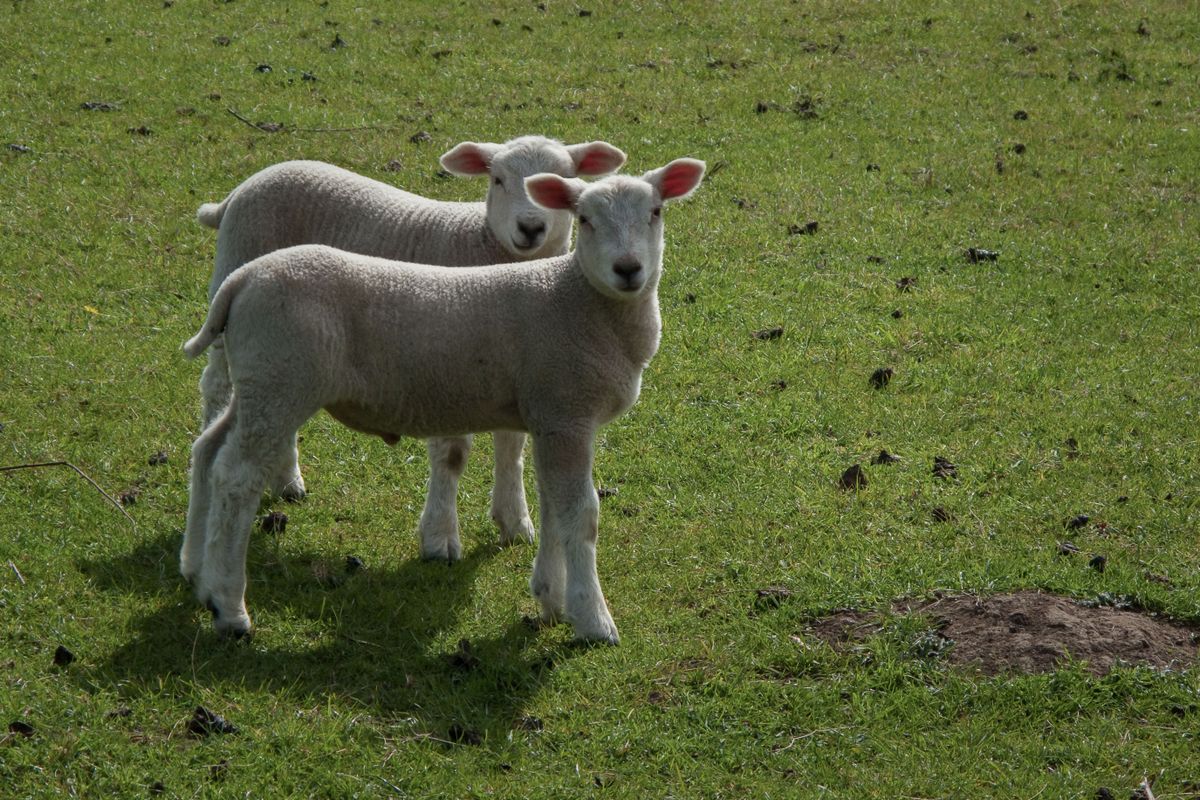
The romantic notion of lambing is lambs frolicking in sunshine while you lean on a fence and feel a warm swell of contentment. The reality involves cold mud, a head-torch strapped to your forehead at 2 am, and an intimacy with life and death that never quite becomes ordinary — no matter how many seasons pass.
We’ve just come through our seventh lambing at Pilgrim Ridge, and every year I sit down afterwards intending to write something that captures it honestly. Every year I find the words fall a bit short. But here’s an attempt.
Why 2am?
Ewes don’t keep business hours. About 70% of births happen between dusk and dawn — a throwback to predator pressure, some researchers think, or simply a quirk of the circadian rhythm. Whatever the reason, it means lambing supervision is fundamentally nocturnal work.
During peak lambing — which for us runs about three weeks in late May and June — we do checks every two to three hours through the night. That’s my partner Sarah and me taking shifts: one of us sleeps from 8 pm to 1 am, the other from 1 am to 6 am. It sounds manageable on paper. By week two, it feels like being mildly concussed.
“By the end of the third week, you’re operating on something beyond tiredness. A kind of functional fog where the only thing that cuts through is the sound of a ewe calling her lamb for the first time.”
What We’re Actually Looking For
On each night check, we’re scanning for:
- Ewes in labour — pawing, circling, lying down and getting up repeatedly, straining
- Ewes that have just given birth — checking the lamb is breathing and standing, and that the ewe is bonding, not walking away
- Lambs that are cold or haven’t fed — a cold lamb that hasn’t accessed colostrum in the first few hours has a very poor prognosis
- Mismothering — when a ewe claims someone else’s lamb or abandons her own
- Difficult presentations — leg back, head back, or twins where one is blocking the other
Most nights, most ewes don’t need you. But the ones that do need you badly, and quickly. A ewe that’s been in hard labour for more than an hour without progress needs intervention. A lamb that’s been on the ground for two hours without standing needs colostrum by tube. These aren’t moments where you can wait until morning.

The Interventions Nobody Warns You About
Before we started farming, the phrase “assisting a birth” sounded clinical and distant. It is neither. It means kneeling in wet grass in a drafty shed at midnight, with one arm inside a ewe, trying to feel which part of the lamb you’re touching and gently correct a presentation that has stalled.
The first time I did this, I was terrified. Seven seasons in, I’m merely nervous. There’s a tactile knowledge that builds up over years — a sense of where things are, what’s normal, what’s wrong. You can’t learn it from a book. You learn it from the animals.
When it goes right — when the lamb slides free and shakes its head and the ewe swings around and starts licking it — the relief is profound in a way that’s hard to describe. You’ve just helped something live that might not have otherwise. That matters.
Colostrum: The First and Most Critical Feed
Colostrum — the first milk a ewe produces — is extraordinary stuff. It’s thick, golden, loaded with antibodies, and absolutely essential. A lamb that doesn’t get colostrum in its first four to six hours of life has a compromised immune system that no amount of later care can fully compensate for.
We keep frozen colostrum on hand (from ewes with excess, or purchased from a reputable source) for lambs that can’t access their mother’s milk. Tube-feeding a newborn lamb is a skill that takes practice and a steady nerve, but it’s one of the most valuable things a sheep farmer can learn.
The Losses
I’d be giving you a dishonest picture if I didn’t mention the losses. Lambing is also the time of year we lose animals, sometimes despite everything we do. A lamb too small to thrive, a ewe that doesn’t survive a difficult birth, a set of triplets where the smallest never quite catches up — these are part of the season too.
We don’t become numb to them. We do develop a kind of reckoning with them — an acceptance that this is the nature of working with living things, in a living system, where not every story has a good ending. What we can do is give every animal the best possible chance. The rest is out of our hands.
And Then, the Good Mornings
But then there are the mornings when you walk out after a night of hard work and the paddock is full of lambs in the early light, some of them already running and leaping in that ridiculous, joyful way lambs have. The ewes are settled, calling softly. The farm feels — for a moment — like exactly the place it ought to be.
That’s the thing about lambing. It’s demanding and exhausting and occasionally heartbreaking. It’s also the most alive we feel all year.
We wouldn’t have it any other way.
Want to experience farm life first-hand?
Stay at Pilgrim Ridge During Lambing Season
May–June guests are often invited to join the morning lambing rounds. Spots fill fast.
More from the Journal
12-Hour Slow-Roasted Lamb Shoulder
Read more →