12-Hour Slow-Roasted Lamb Shoulder with Preserved Lemon & Spices
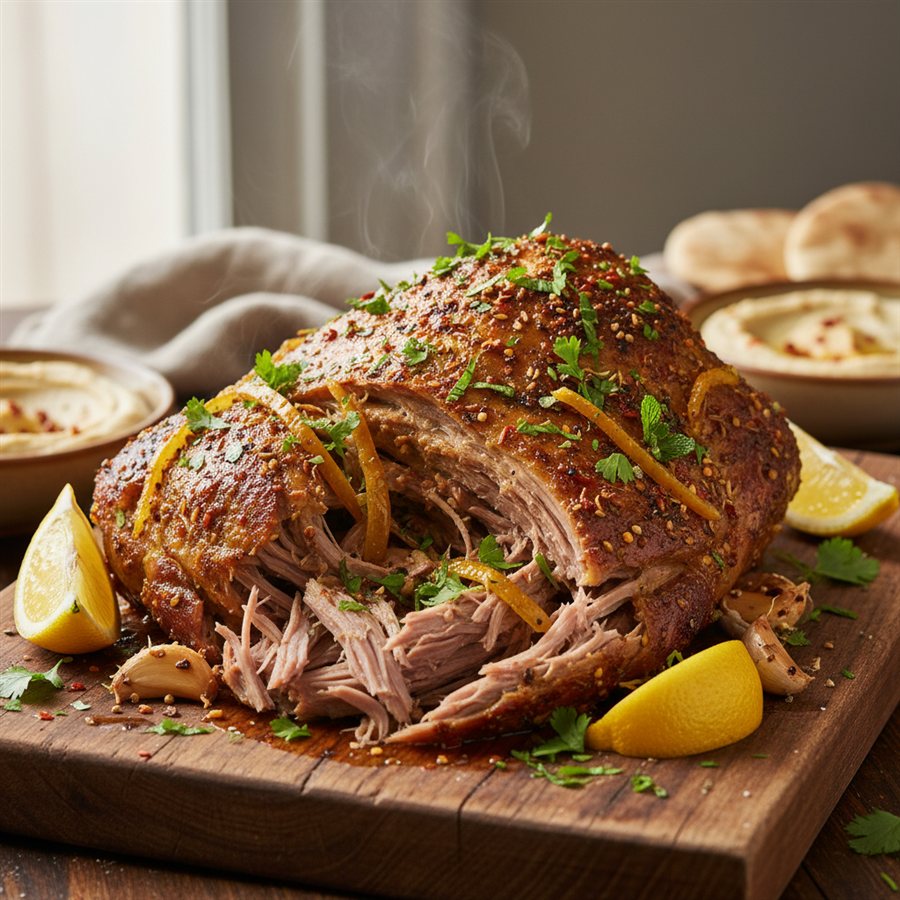
This is the recipe we pull out for every birthday, Christmas, and occasion worth marking. It requires almost no skill — just time, a good piece of lamb, and the restraint to not open the oven. The shoulder falls apart at the look of a fork and fills the house with a smell that makes everyone think you’ve been cooking for days. You have.
The key to this recipe is threefold: a bone-in shoulder (bone-in means better flavour and a more forgiving cook), a genuine low temperature (120°C is not a typo), and the full twelve hours. Shortcut any of these and you’ll get a good result. Follow all three and you’ll get something extraordinary.
Recipe at a Glance
Ingredients
The lamb
- 1 bone-in lamb shoulder, approx. 2–2.4 kg
- 2 tsp flaky sea salt
- 1 tbsp olive oil
The paste
- 1 preserved lemon, skin only, finely chopped
- 6 garlic cloves, crushed
- 2 tsp ground cumin
- 1 tsp ground coriander
- 1 tsp smoked paprika
- ½ tsp ground cinnamon
- ¼ tsp ground allspice
- 2 tbsp olive oil
- 1 tbsp honey
- Zest and juice of 1 lemon
In the pan
- 2 brown onions, roughly sliced
- 1 head of garlic, halved horizontally
- 4 sprigs fresh rosemary
- 250 ml chicken or lamb stock
- 125 ml white wine (or extra stock)
Method
The night before (or 2+ hours ahead): Mix all paste ingredients together into a rough, fragrant slurry. Score the lamb shoulder all over with a sharp knife — cuts about 2 cm deep, all across the fat cap and flesh. Push the paste into the cuts and rub it all over the surface. Cover and refrigerate overnight if possible; two hours minimum.
Preheat your oven to 120°C fan-forced (140°C conventional). Take the lamb out of the fridge an hour before cooking to come to room temperature.
Build the base: In a large roasting pan, scatter the onions, halved garlic head, and rosemary. Pour in the stock and wine. Set a roasting rack over the top if you have one, or sit the shoulder directly on the vegetables.
Sear first (optional but worth it): Heat a large frying pan over high heat with a splash of oil. Sear the lamb shoulder on all sides until deeply browned, about 8–10 minutes total. Transfer to the roasting pan. Skip this step if you’re short on time — the long cook will still give you good colour on the fat cap.
Cover tightly with two layers of foil, pressing it down around the rim of the pan to seal in the steam. Roast at 120°C for 10–12 hours. The internal temperature should reach 90–95°C for the collagen to fully break down.
The final blast: Remove the foil, increase the oven to 220°C, and roast for a further 20–25 minutes until the surface is deeply caramelised and crackling at the edges.
Rest, then pull: Cover loosely with foil and rest for at least 30 minutes. Then pull the meat apart with two forks — it should offer no resistance at all. Taste and adjust seasoning. Strain the pan juices and serve as a sauce.
“The test of a perfect slow-roast lamb is whether the bone slides clean out with one gentle pull. If it does, everything else will follow.”
What to Serve With It
This lamb is rich and deeply flavoured, so it wants sides that are either fresh and acidic, or soft and starchy to soak up the juices:
- Flatbreads and a bowl of labneh with za’atar
- A simple green salad with a sharp lemon dressing
- Roasted cauliflower with tahini
- Crushed roast potatoes cooked in the same pan (add them in the last 2 hours)
- Pomegranate seeds and fresh mint scattered over the finished dish
Can You Do It in Less Time?
Yes — at 160°C for 5–6 hours you’ll get a very good result. But you won’t get this result. The twelve hours at low temperature is what breaks down every last strand of collagen into gelatin, giving the meat that unctuous, self-basting quality that a higher-faster cook simply can’t replicate. Do it properly at least once before you decide to cut corners.
Follow the journey
Pilgrim Ridge Farm — A Farm in the Making
Subscribe to stay up to date with the farm’s progress and future produce and stays.
More from the Journal
Lambing Season: What Really Happens at 2am
Read more →